How Long Does It Take to Industrial 3D Print Molds ?
Investing in Industrial 3D printer or large format 3D printer brings up a critical question: “How long will it take in printing?” with million-dollar business stakes. Unlike consumer FDM printers that make small items in hours, industrial-grade systems — especially pellet-based models — follow a totally different timeline: from 24-hour mold prototypes to 72-hour aerospace components.
Key insight: Print time is no longer only about printing speed. Combining with post-processing tools like 5-axis CNC routers can cut total production cycles by 60%. This guide explains industrial 3D print durations, matches use cases for 3D printer for molding, and shows how 5 axis mold CNC completes the full manufacturing loop.Part 1: Industrial Particle 3D Printers – Time Drivers & Real-World Benchmarks

Particle-based industrial 3D printing (FGF) dominates automotive and aerospace industries for manufacturing large, complex parts. Different from filament printers, FGF systems deposit thermoplastic pellet materials including PETG, PVC, ABS, PC, PA, HDPE, TPU and high-performance engineering plastics & composites, bonded by adhesives or lasers layer by layer.
Print time mainly depends on four core industry factors:
1. Technology Type & Material Flow Rate
FGF Pellet Materials: Fused Geometric Surface Printing (FGF) uses granular pellets as raw materials. Similar to FDM, it melts and extrudes thermoplastic granules layer by layer. Higher extrusion volume makes FGF faster than regular FDM, ideal for rapid large-part production.
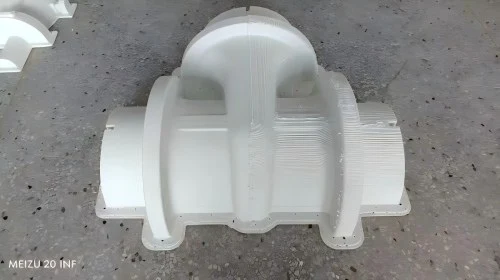
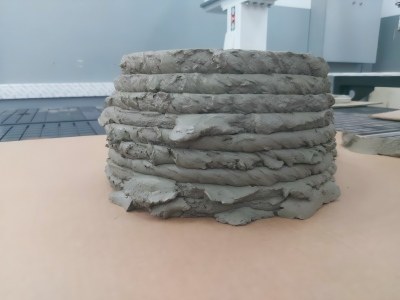
Concrete formulations: Featured with large nozzle and fast printing speed, it is the primary option for industrial 3D printer for mold projects, with short molding cycle time.
Binder Jetting (Sand Molding): The mainstream solution for 3D printer for molding. Manufacturers like China Fast Group run sand particle extrusion at 80–120 kg/h, shortening traditional mold production from 2–3 months to only 2–3 days. A 60x40x30cm transmission housing sand mold takes just 18–24 hours to print — 20 times faster than conventional tooling.
Metal Powder Bed Fusion: For functional metal parts, systems like BAAM run 200–500x faster than consumer printers. 0.3-inch nozzles deposit 10 lbs material per hour. A 40x30x25cm 15kg titanium aerospace bracket needs 36–48 hours, far quicker than forging which takes weeks.
Particle Size vs. Precision: 0.1mm fine sand reduces mold print time by 30% but needs post-finishing; 0.05mm metal powder extends printing time by 20% but delivers near-net-shape high-precision parts.
2. Large Format Constraints & Batch Efficiency
Large format 3D printer with build volume over 1m³ solves the split-and-assemble problem of small printers. A 1.2x0.8x0.6m automotive dashboard mold can be printed as one single piece in 32 hours on Rhino large format 3D printers, saving 8 hours of assembly work.
Batch printing brings obvious efficiency: Filling a 1m³ build plate with 50 small molds costs only 40 hours in total, compared with 10 hours per single mold alone — saving 25% total time.
3. Infill & Post-Print Curing Requirements
Industrial molds and parts prioritize structural integrity over material saving:
- Sand Molds: 100% infill is required. Binder jetting fast curing shortens post-print drying to 4–6 hours, versus 24 hours for traditional sand casting.
- Metal Parts: 99% laser sintering density increases print time by 15% but eliminates internal porosity. A 20cm turbine blade takes 22h printing + 8h heat treatment.
4. Real-World Industrial Print Time Table
| Application | Size | Printer Type | Print Time | Key Advantage vs. Traditional |
|---|---|---|---|---|
| Automotive Sand Mold | 60x40x30cm | Binder Jetting | 18–24h | 2–3 days vs 2–3 months |
| Aerospace Titanium Bracket | 40x30x25cm | Metal Powder Fusion | 36–48h | 50% weight reduction |
| Injection Mold Core | 25x20x15cm | Resin-Based Industrial | 12–16h | Ready for 5-axis CNC finishing |
| Large Planter Prototype | 100x80x60cm | Particle Pellet Extrusion | 48–60h | One-piece printing without assembly |
Part 2: The 5-Axis CNC Connection – Refinement Time After Printing
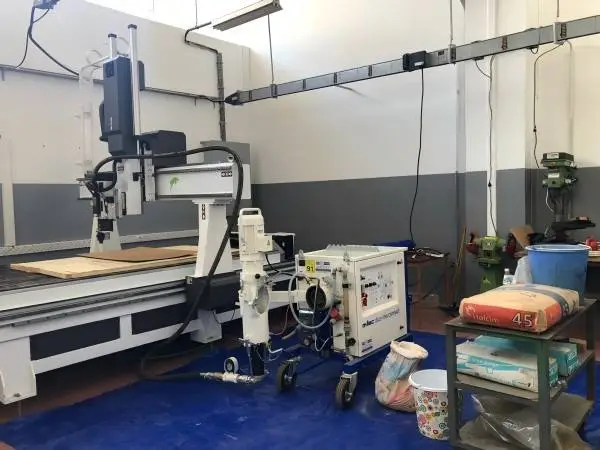
Industrial 3D printed parts are rarely ready for direct use. 5 axis mold CNC and 5 axis CNC router play a decisive role in precision finishing, directly lowering total production lead time.
Why 3D Printing + 5-Axis CNC = Faster Cycles
3D printing creates near-net-shape blanks, while 5-axis machines handle high-precision finishing.
- A 3D printed injection mold (12–16h print) only needs 2–3 hours 5-axis CNC milling to reach Ra0.8μm surface finish, compared with over 10 hours for full CNC machining.
- 5 axis CNC routers process large 3D printed plastic parts like boat hulls 40% faster than 3-axis routers with one-time clamping and full-angle access.
5-Axis CNC Time-Saving Features for 3D Print Finishing
- AI-Powered Programming: Rhino CNC series auto-generates tool paths, cutting mold setup time from 5 hours down to 1 hour, perfect for high-mix custom molds.
- Micron-Level Precision: 5-axis equipment achieves ±0.003mm positioning accuracy, turning rough 3D prints into tight-tolerance industrial molds.
- One-Setup Processing: A 8h 3D printed gear blank only needs 1.5h 5-axis milling, versus 4h on 3-axis machines, finishing teeth, bores and surfaces in one run.
Case Study: Molding Production Accelerated Workflow
- 3D printer for molding: Print mold core (14h)
- 5 axis mold CNC: Precision surface finishing (2.5h)
- Injection molding: Mass produce 100 parts (4h)
Total cycle time: 20.5 hours vs over 10 days for fully traditional machined molds.
Part 3: Optimizing Industrial 3D Print Time – Expert Tips
- Leverage Hybrid Machines: Rhino CNC integrated 3D printing + 5-axis CNC all-in-one design eliminates workpiece transfer time.
- Batch Strategically: Maximize large format 3D printer build plates; 50 jewelry molds finish in 30h total instead of 2h per piece.
- Match Technology to Finish Needs: Use fast binder jetting for parts needing CNC finishing; choose slow powder fusion for parts requiring minimal post-machining.
- Predict Post-Processing Time: Reserve extra 10–30% of print time for 5 axis CNC router finishing when quoting customer projects.
Part 4: FAQ – Industrial 3D Printing Time Questions
Q1: How much faster is an industrial 3D printer than a consumer FDM printer for large parts?
A: For parts over 50cm in any dimension, industrial 3D printers are 10–50x faster. A 1m-tall prototype takes 48–60h on large format 3D printers, far more efficient than consumer models especially for molds requiring CNC refinement.
Q2: What is the main difference between 3D printer and 5 axis CNC machining center for mold making?
A: Industrial 3D printing is an additive manufacturing process (material growing), while 5-axis CNC router is subtractive manufacturing (material cutting). 3D printing saves raw material and is safer for complex mold blank production.
Q3: Can 5 axis mold CNC reduce long 3D print time?
A: Yes. Print molds in standard resolution in 16h, then finish precision with 5-axis CNC in 3h. Avoid ultra-fine slow printing; total saves around 17 hours without losing accuracy.
Q4: What’s the maximum size a large format 3D printer can handle, and how long does it take?
A: Modern large format 3D printers support build volume up to 3x2x2m like Rhino PELLET 2030. A full 3x2x1m industrial fixture takes 72–96h by particle extrusion, still 80% faster than traditional assembly or solid block machining.
Q5: How does a 5 axis CNC router complement large format 3D printing?
A: 5-axis routers easily finish large irregular 3D printed parts such as boat hulls and architectural models that 3-axis machines cannot reach. A 1x0.8m printed plastic sign takes 24h printing + 2–3h 5-axis routing, much faster than 3-axis processing or manual sanding.
Q6: Can industrial 3D print time be estimated accurately before production?
A: Yes. Use professional slicing software like Materialise Magics or Simplify3D for particle printers to get precise time estimation. For projects with 5-axis CNC finishing, add 10–30% extra time to calculate total cycle.
Conclusion: Industrial 3D Printing Time Equals Total Production Cycle
In industrial manufacturing, printing time alone means nothing — the real metric is printing plus CNC finishing time. A large format 3D printer may spend 48h printing a mold, but matched with 5 axis mold CNC, total lead time is only around 50 hours, compared with weeks by traditional methods.
p>Manufacturers should select the right industrial 3D printer by material and size demand, then integrate 5-axis CNC technology to balance speed and precision perfectly.
Get Your Custom Mold 3D Printing & CNC Solution
Calculate your exact industrial print and finishing time with our professional team. We provide large format 3D printer and 5-axis CNC mold machining one-stop service for global manufacturers.
Contact us for free project quotation now.