By Serena Zhang | 30 October 2025 | 0 Comments
What Industries Use 3D Printing ? ( 10 Core Industries Actively Using 3D Printing Technology in 2025
What Industries Use 3D Printing ? ( 10 Core Industries Actively Using 3D Printing Technology in 2025)
3D printer have become common in daily life—affordable, capable of printing small-scale models, and adding fun to everyday routines. But beyond consumer use, large-bed industrial 3D printer are emerging as a game-changer. This new technology offers significant advantages in energy conservation and emission reduction, and it’s poised to gain widespread adoption across mold and manufacturing industries in the near future.Which industries are leading the charge in embracing and maximizing 3D printing? This article dives into 10 core Industries Actively Using 3D Printing Technology in 2025
—fully aligning with 3D printing applications by industry trends.


1. Aerospace Industry: 3D Printing for Lighter, More Efficient Aircraft & Spacecraft
The aerospace industry was one of the first high-tech fields to adopt 3D printing, driven by its strict demands for lightweight materials, high strength, and complex component designs—all of which 3D printing excels at.
►Lightweight aerospace components: Using topology optimization, 3D printing creates hollow or grid-like structures that traditional manufacturing can’t produce. These parts maintain strength while cutting weight, directly reducing aircraft fuel consumption. Examples include aircraft cabin door brackets and engine fuel nozzles. This is also the core logic of how 3D printing reduces aerospace fuel consumption.
►Complex internal flow channels: 3D printing directly manufactures engine blades with intricate cooling flow channels, boosting heat dissipation efficiency and overall engine performance.
►Rapid spare parts for aerospace: At space stations or remote airports, 3D printers can produce urgent repair tools or discontinued spare parts on-site. This shortens supply chains and ensures mission safety.
►Complex internal flow channels: 3D printing directly manufactures engine blades with intricate cooling flow channels, boosting heat dissipation efficiency and overall engine performance.
►Rapid spare parts for aerospace: At space stations or remote airports, 3D printers can produce urgent repair tools or discontinued spare parts on-site. This shortens supply chains and ensures mission safety.
2. Medical & Dental Fields: 3D Printing for Personalized Healthcare
3D printer is revolutionizing the medical industry by enabling personalized treatment tailored to individual patients. It leverages patient-specific data to create precise medical models and devices, solidifying the role of medical 3D printing applications in modern healthcare.
►Surgical planning models: Using a patient’s CT or MRI scans, 3D printers produce physical models of organs, bones, or tumors. These models let doctors practice surgeries, plan optimal paths, and increase success rates.
►Custom medical implants: Personalized medical implants 3D printing delivers cranial and maxillofacial implants that match a patient’s unique physiological structure, improving treatment outcomes and reducing recovery time.
►Surgical guide plates: These 3D-printed “navigation tools” ensure accurate drilling and cutting during surgeries, minimizing errors.
►Dental 3D printing applications: Printing dental crowns, bridges, and invisible braces has become a standard workflow in dental clinics, boosting efficiency and precision.
►Bioprinting (frontier): Researchers are exploring 3D printing with living cells to create vascular networks and simple tissues, paving the way for future organ transplants. This further strengthens the importance of 3D printing applications by industry in the medical sector.
3. Automotive Industry: 3D Printing for Car Prototypes, Tools & High-Performance Parts
From luxury sports cars to mass-market vehicles, the automotive industry uses 3D printing across the entire product lifecycle—from design to production and restoration, perfectly fitting industrial 3D printing uses scenarios.
►Rapid automotive prototyping: 3D printing creates prototypes of car bodies, interior parts, or functional components in hours or days, slashing new vehicle development cycles.
►Custom automotive tools & fixtures: Lightweight, 3D-printed tools designed for assembly lines improve production efficiency and worker ergonomics.
►High-performance automotive components: Racing cars and high-end sports cars use 3D-printed intake manifolds, radiators, and brake calipers to optimize performance, meeting the precision needs of racing cars for key parts.
►Classic car parts restoration: 3D printing replicates rare, discontinued parts for vintage cars, meeting the needs of collectors and repair shops.
4. Architecture & Construction: 3D Printer for Models, Components & Houses
Architects and construction companies use 3D printing to turn complex designs into tangible, precise models—and even full-scale structures, aligning with the future of 3D printing in construction.►3D-printed architectural scale models: These models include intricate surfaces, internal structures, and surrounding landscapes (e.g., retractable landscape bridges, large landscape seats). They offer greater precision and detail than handcrafted models.
►Conceptual models & sand tables: 3D-printed models showcase initial design concepts and large-scale urban planning projects, helping stakeholders visualize ideas.
►3D-printed buildings (cutting-edge): Large 3D printers use specialized concrete to print building components or entire house/bridge structures. This technology is expected to revolutionize the construction industry by reducing time and material waste, a key part of the future of 3D printing in construction.
5. Industrial Manufacturing & Molds: 3D Printing to Innovate Traditional Processes
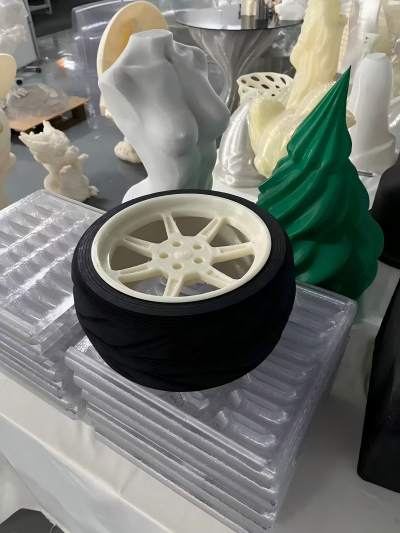
3D printing is transforming traditional manufacturing by solving inefficiencies in mold production and component manufacturing, highlighting the benefits of 3D printing in manufacturing.
►Contour-fitting cooling water circuits for injection molds: 3D printing adds complex, custom cooling channels inside molds. This ensures uniform cooling, shortens injection molding cycles, and improves product quality.
►3D-printed sand casting molds: Directly printing sand molds for metal casting eliminates time-consuming traditional mold-making steps. It’s ideal for 3D printed sand casting molds for small batch production and complex casting designs.
6. Energy Sector: 3D Printing for Clean, Efficient Energy Equipment
The energy industry uses 3D printier to produce more durable, efficient components for renewable and traditional energy equipment, embodying the benefits of 3D printing in manufacturing.►3D-printed wind turbine components: Lightweight blade parts and custom maintenance tools reduce wind turbine weight and improve operational efficiency.
►Oil & gas industry spare parts: In remote locations like offshore platforms, 3D printers produce urgent spare parts on-site, minimizing equipment downtime.
►3D-printed solar panel fixtures
: Custom installation brackets optimize solar panel placement and improve energy absorption.
: Custom installation brackets optimize solar panel placement and improve energy absorption.
7. Consumer Electronics: 3D Printing for Customized & Miniaturized Parts
The consumer electronics industry relies on 3D printing for customized and miniaturized components, especially to meet the precision needs of smart devices—aligning with 3D printing industry trends 2025.►Customized casings & accessories: 3D printing creates personalized shells or protective cases for headphones, smartwatches, and other devices, satisfying users’ diverse aesthetic needs.
►Miniaturized internal components: It produces micro gears and sensor brackets that are hard to make with traditional processes, supporting the development of thinner, lighter electronic devices.
►Rapid prototyping for new devices: This shortens the prototype development cycle of mobile phones, smart home products, and other devices, accelerating the launch of new products—consistent with 3D printing industry trends 2025
.
.
8. Fashion & Apparel: 3D Printer for Innovative Design & Sustainability
3D printing is reshaping the fashion industry, balancing design innovation with environmental friendliness, and promoting the concept of 3D printing for sustainable fashion.►3D-printed fashion accessories: It creates personalized jewelry, eyeglass frames, and even customizable high-heel heels, breaking the limits of traditional design.
►Sustainable clothing components: Using biodegradable materials, 3D printing produces clothing structural parts (e.g., coat shoulder supports), reducing fabric waste and complying with environmental trends—core to 3D printing for sustainable fashion.
►Customized sportswear: It prints protective gear and sports bra pads that fit the body’s curves for athletes, enhancing wearing comfort and sports performance.
9. Food Industry: for Personalized & Creative Cuisine
3D printing in the food sector focuses on personalized needs and creative presentation, gradually moving toward commercial application—expanding the boundaries of 3D printing applications by industry in daily life.►Customized food shapes: 3D printing creates uniquely shaped chocolates and cookies for children’s meals and theme banquets, enhancing the visual appeal of food.
►Nutritionally tailored meals: Based on users’ health data (e.g., allergens, nutritional needs), it accurately mixes ingredients and prints meals, suitable for special groups such as the elderly and patients.
►Restaurant creative dishes: High-end restaurants use 3D printing to create complex dish shapes, offering a differentiated dining experience. This expands the boundaries of 3D printing applications by industry in the people’s livelihood sector.
10. Education & Research: for Hands-On Learning & Innovation
The education and research fields use 3D printing as a practical tool to promote knowledge transfer and technological R&D, leveraging the benefits of 3D printing in manufacturing for academic progress.►Educational models: 3D printing produces geographic terrain models and biological organ models (e.g., heart structures) for schools, making abstract knowledge concrete and improving teaching effectiveness.
►Student innovation projects: It supports students in printing robot parts and scientific experiment devices, fostering hands-on skills and innovative thinking.
►Academic research prototypes: Research institutions use 3D printing to quickly produce experimental samples (e.g., new material test pieces), accelerating research progress—driven by the benefits of 3D printing in manufacturing
More information about the large bed industry 3D printer welcome to contact us , wish everyone can get the proper 3D printer easily !
Leave a Reply
Your email address will not be published.Required fields are marked. *